Mostrando entradas con la etiqueta paisaje. Mostrar todas las entradas

14.5.16

Polideportivo matadepera, bammp arquitectes

Fuente: bammp
Fotografía: José Hevia


La Zona Esportiva Municipal de Matadepera (ZEMM), es la nova area determinada en la revisió del planejament en l’any 2010, situada en el límit Sud del municipi, sobre uns plans de suau pendent, entre pinedes i petites rieres com es habitual en la morfologia de la comarca del Vallès.


En aquest àmbit es preveu es vagin col·locant àrees esportives, com l’actual camp de futbol i el futur camp d’hoquei de gespa artificial; paral·lelament, s’ha redactat un projecte de implantació dels edificis que donen els diferents serveis a l’activitat esportiva; en aquest cas en concret, es tracta de l’espai d’accés i d’aixopluc i trobada a l’àrea del futbol, a més d’un petit bar i una zona pel control d’accés i la gestió administrativa.

Les variables d’intervenció que s’han plantejat a nivell projectual son derivades de un procés programàtic en permanent canvi i d’un entorn amb una potencialitat molt fràgil:

D’una banda es vol endreçar els fluxos entre esportistes, públic i gestors d’activitats, tant en las situacions transitòries actuals, generades pels barracons que funcionen com a vestidors, com en les situacions definitives en un futur proper; fent compatible els requeriments específics de cada col·lectiu amb la necessitat d’aplegar-se en espais de trobada i relació.

D’altre banda, també es vol posar en evidencia el millor de l’entorn, amb una implantació lleugera i reversible, amb un edifici sobre pilotis que no altera la topografia i permet generar varies tipologies d’espais d’aixopluc i d’umbracle a l’estiu. Es un edifici que esdevé a la vegada, un balcó panoràmic, un porxo, un umbracle, una terrassa, un lloc ideal per seguir les competicions tot gaudint del paisatge a l’aire lliure.

Año: 2015
Ubicación: Matadepera


Leer Más...


21.3.16

Diatoms Fur, Reiulf Ramstad Architekter, Leth & Gori

Fuente: Reiulf Ramstad Architekter, Leth & Gori
Fotografía: Bjørn Pierri Enevoldsen, RRA/Leth&Gori.


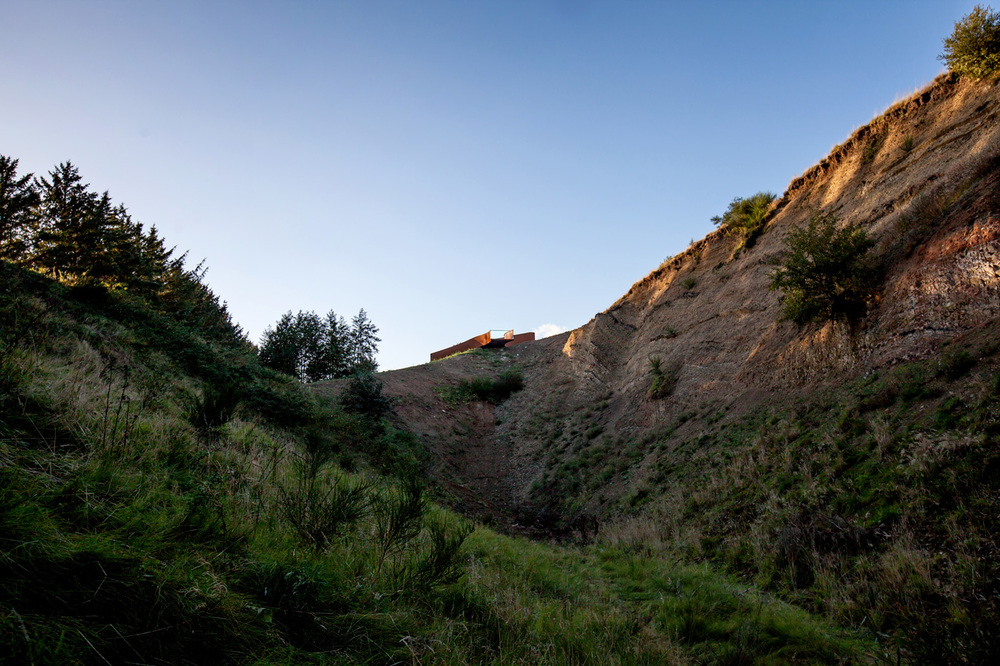
In 2012 Reiulf Ramstad Architects in collaboration with LETH & GORI was chosen by the foundation Realdania and Naturatyrelsen to develop a project in the area around Fur Knudeklint. The project is one of ten projects in Realdania and Naturstyrelsen’s campaign ‘Steder i Landskabet‘ [Places in the Landscape] celebrating ten unique places in the Danish landscape.

The project consists of thee sculptural objects carefully placed to emphasize a special place relating to the history or nature of the site. Cor-ten steel is the only material used in the project so the architecture is characterized by a clear and precise transition between the architecture and the natural landscape.


Diatoms Fur is a small project placed in a unique landscape on the island of Fur, Denmark. The project consists of thee sculptural objects carefully placed to emphasize a special place relating to the history or nature of the site. The inspiration for and title of the project comes from the microscopic algae Diatoms that are the main component in the special Diatomaceous earth of the area.


The small island of Fur contains a very unique and delicate landscape. The special geology of the area called the Fur Formation is a Diatomite sediment approx. 60 meters thick consisting of diatomite with up to 180 layers of volcanic ash dating up to 55 million years back. The Formation has been shaped by the ice ages into a modulating landscape of hills, valleys and cliffs. In addition for the last century local industries have further shaped the landscape in terms of quarrying. One of the most unique places to experience this is the cliff formation called Fur Knudeklint on the west side of the island. On this site a combination of naturally formed cliffs rising up to 30 meters above the water and large valleys created by humans has created a unique place to experience the landscape and geology of Fur.

The area around Fur Knudeklint has a history as an induatrial site from the 1920ies where mining started. This activity continued until the 1990ies and has left a vast landscape of canyons. The biggest of these placed close to Fur Knudeklint is approx. 120 meters long, 40 meters wide and 20 meters deep. After the mining industry ceased the site was sold and in 2005 the new owners opened a micro brewery Fur Bryghus in the restored main building from the mining era.

Año: 2015
Ubicación: Fur, Dinamarca


Leer Más...


18.2.16

A Bodega, Cubus, Taller d’Arquitectura

Fuente: Cubus, Taller d’Arquitectura
Fotografia: Adrià Goula vía Metalocus


Proyecto de rehabilitación de una antigua bodega de piedra. Situada en un entorno rural, el proyecto se acomoda a los límites de los muros existentes, consistentes en dos cuerpos: el principal de planta baja y un torreón de dos niveles.

El espacio se concibe a partir de la perforación de las esquinas de estos cuerpos para obtener iluminación y visuales en diagonal a través de los vaciados, estrategia que define asimismo los huecos en fachada como vaciados en la fachada, y no como ventanas convencionales.

Año: 2015
Ubicación: Lugo


Leer Más...


9.2.16

Site Gallery, ARKxSITE

Fuente: ARKxSITE


This international one-stage architecture competition invites all architecture students, young architects and young professionals with a degree in architecture studies (≤ 40 years old) to develop and submit compelling ideas for the design of a contemporary Site Gallery located near the River Tower (Torre do Rio) in the bank of the Guadiana River and adjacent to the fortified walls of the village of Mértola, in the southeast of Portugal.

The River Tower (Torre do Rio) is a significant landmark on a prominent landscape, a place of great cultural heritage and historical significance with characteristics that must be fully preserved.

When generating a vision for an intervention located within such a spectacular place, it is essential that each proposal emphasizes, respects and celebrates the site, while providing visitors with a unique experience.

Leer Más...


13.11.15

Hotel Awasi, Felipe Assadi - Francisca Pulido

Fuente: Felipe Assadi Arquitectos
Fotografía: Fernando Alda


Compartimos hoy con vosotros el proyecto para un complejo hostelero situado en el entorno bucólico del chileno Parque Nacional Torres del Paine llevado a cabo por los arquitectos Felipe Assadi y Francisca Pulido.


El hotel Awasi construye como propuesta una conjunto de volúmenes que se adaptan tanto a la topografía del lugar como a la naturaleza del entorno buscando relaciones visuales con el privilegiado paisaje. 

Sencillas construcciones con la madera como material principal característico tanto en interior como en exterior disponen de espacios cubiertos exteriores para ceder el protagonismo al entorno en que se sitúan. 

Año: 2014
Ubicación: Torres del Paine, Chile


Leer Más...